
Spring 2026
Easter Burny
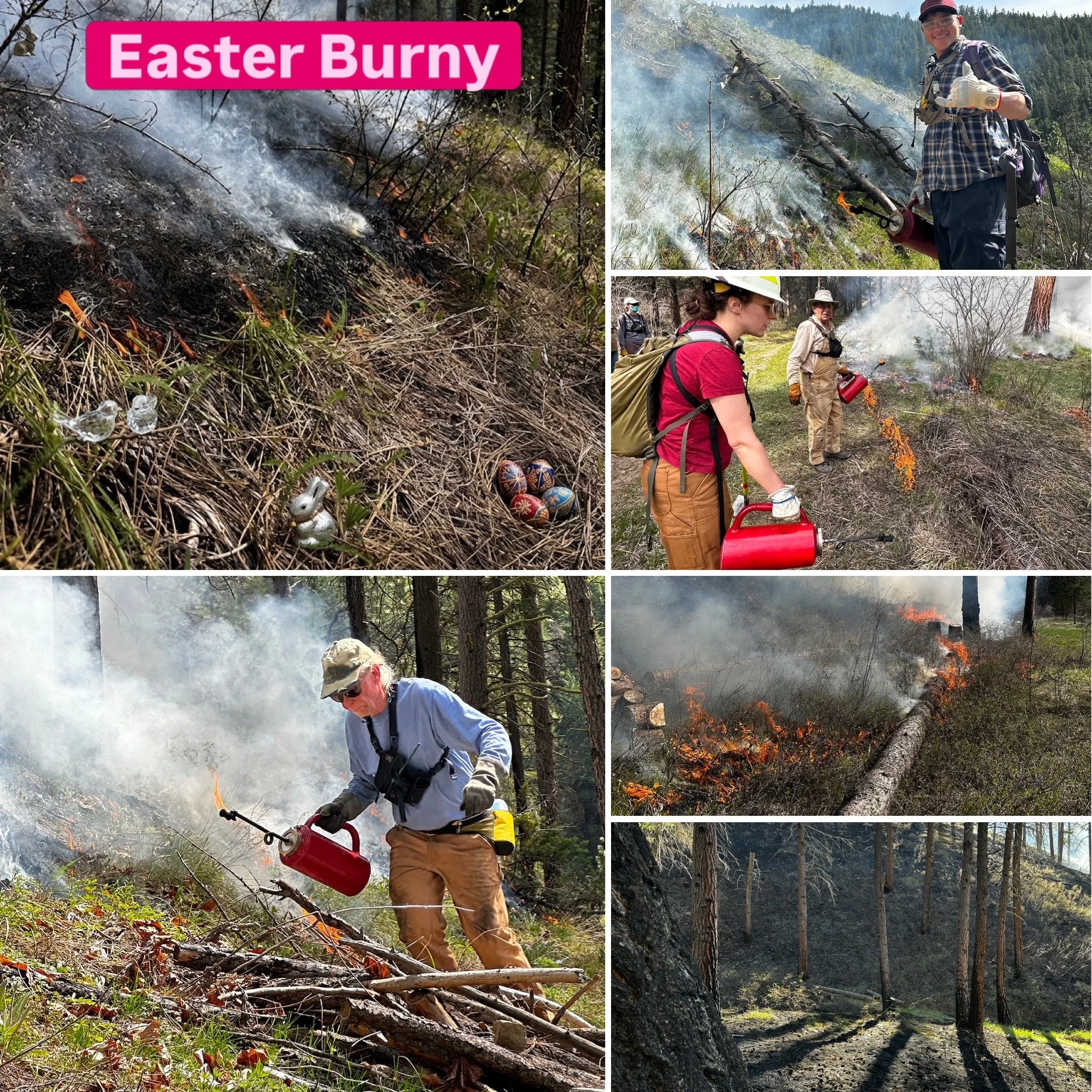
The Spring burn season started with an early April burn up Eagle Creek outside of Leavenworth, WA. A very dry March led to really nice pre green up fuel conditions. When the forecast was in and the resources lined up, Easter Sunday turned out to be the best looking burn day. Joined by neighbors, friends, community volunteers and a contract crew, the landowners were very pleased with how the burn turned out. In 2015 the property had burned from a wild fire, by burning it again 11 years later they are establishing a fire return interval that helps reduce fuels, cycles nutrients, and protects the large trees and infrastructure they have on the property.
Chelan Douglas Land Trust
Day 1 and 2
Chelan Douglas Land Trust has been doing a lot of work on their MTN Home property the past two years. They completed an 80 acre thinning and pile burning treatment this past Fall and now this Spring in some of those same areas they utilized the PBA to begin broadcast burning. The CDLT hopes to manage these lands with a historic fire return interval helping the native plants dependent on fire. Additionally this treatment will help create a large fuel break outside of the town of Leavenworth. 2 units were burned in the early Spring on back to back days. These units are open to the public and we highly encourage people to walk through them often and watch them change and regenerate over time.
CDLT MTN HOME DAY 3
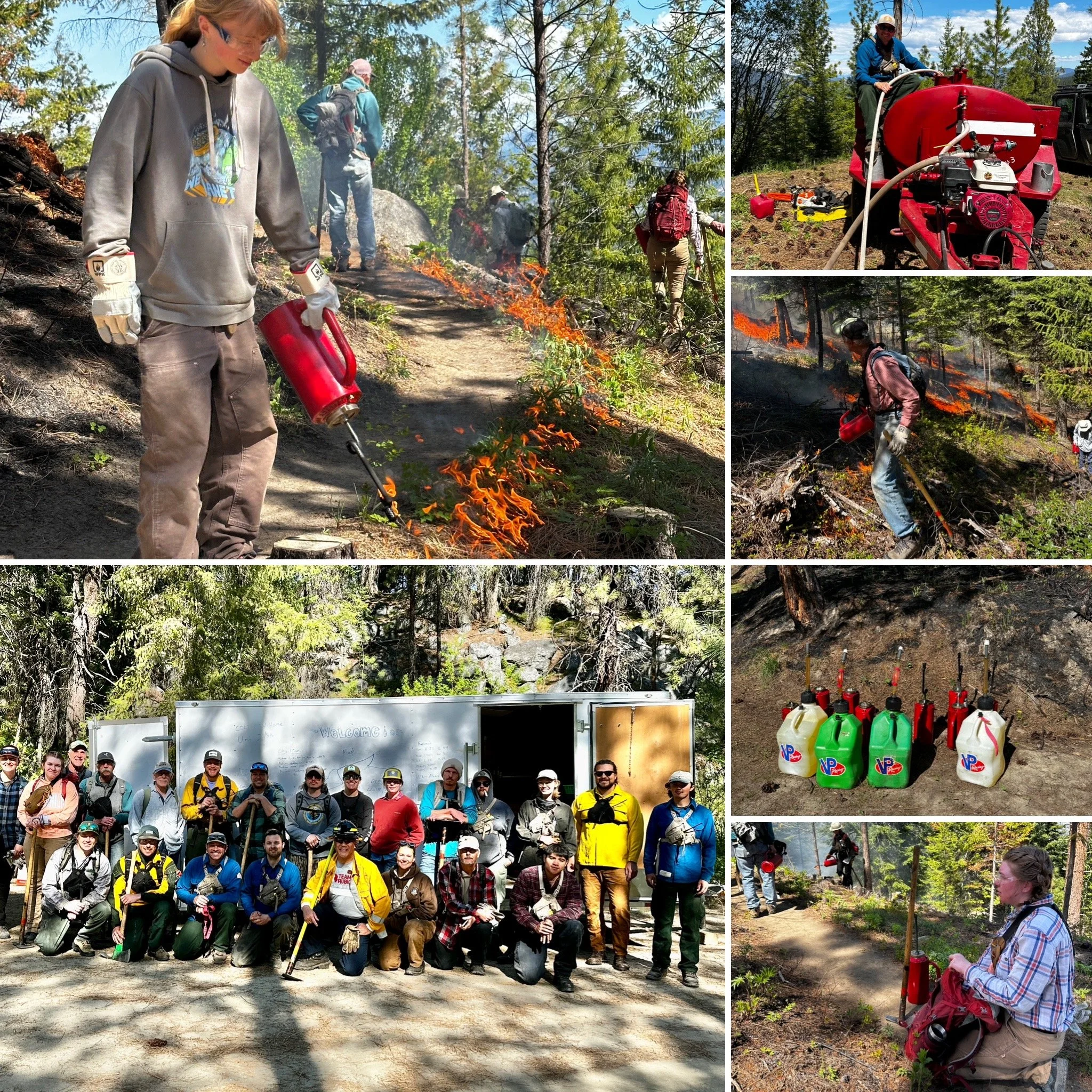
The third day of the CDLT MTN HOME burn was extra special as the Leavenworth Discovery school came out and participated in the burn. Students were given a small chunk of the unit to burn. Along with the school, other community volunteers, participated and even the former Executive Director of CDLT came out to put some fire on the ground.
Wenatchee River Institute- Biochar
The December wind and rain storms wreaked havoc on many of the properties in Leavenworth. The Wenatchee River Institute and their campus along the river did not avoid the drama. In the recent past, WRI has hosted several PBA workshops and events. So when they were wondering what to do with all the material that had come down on the property from the storm they reached out to the PBA wondering if Biochar would be a good option. To be honest, we weren’t sure…. A few things made it extra challenging; 1st, can you burn in the UGA? Actually yes, if you go through the DNR permitting process and you are burning natural vegetation to reduce wildfire fuels. 2nd, the shear number of cubic yds that came down was a lot and we hadn’t tested the biochar kilns to that level yet. Lastly, even if burning is allowed and can be done what would the neighbors and community think of burning almost 100 cubic yards of debris…. Well, we did it. A permit was approved by the DNR and two large kilns were set up in strategic locations. The burning happened on a cooler Spring day and there is a good chance the people in town had no idea. The School PE class about every hour rode their bicycles past the operation, people walked their dogs through the park and very few people seemed intrigued enough to go out of their way to ask what was happening. The remarkable thing about the biochar kilns is they have very low emissions. From a few hundred yards away its almost indiscernible that burning is going on. This was a great success and we hope to do more biochar kiln burning in the future.
High School
Fire Effects Learn and Burn
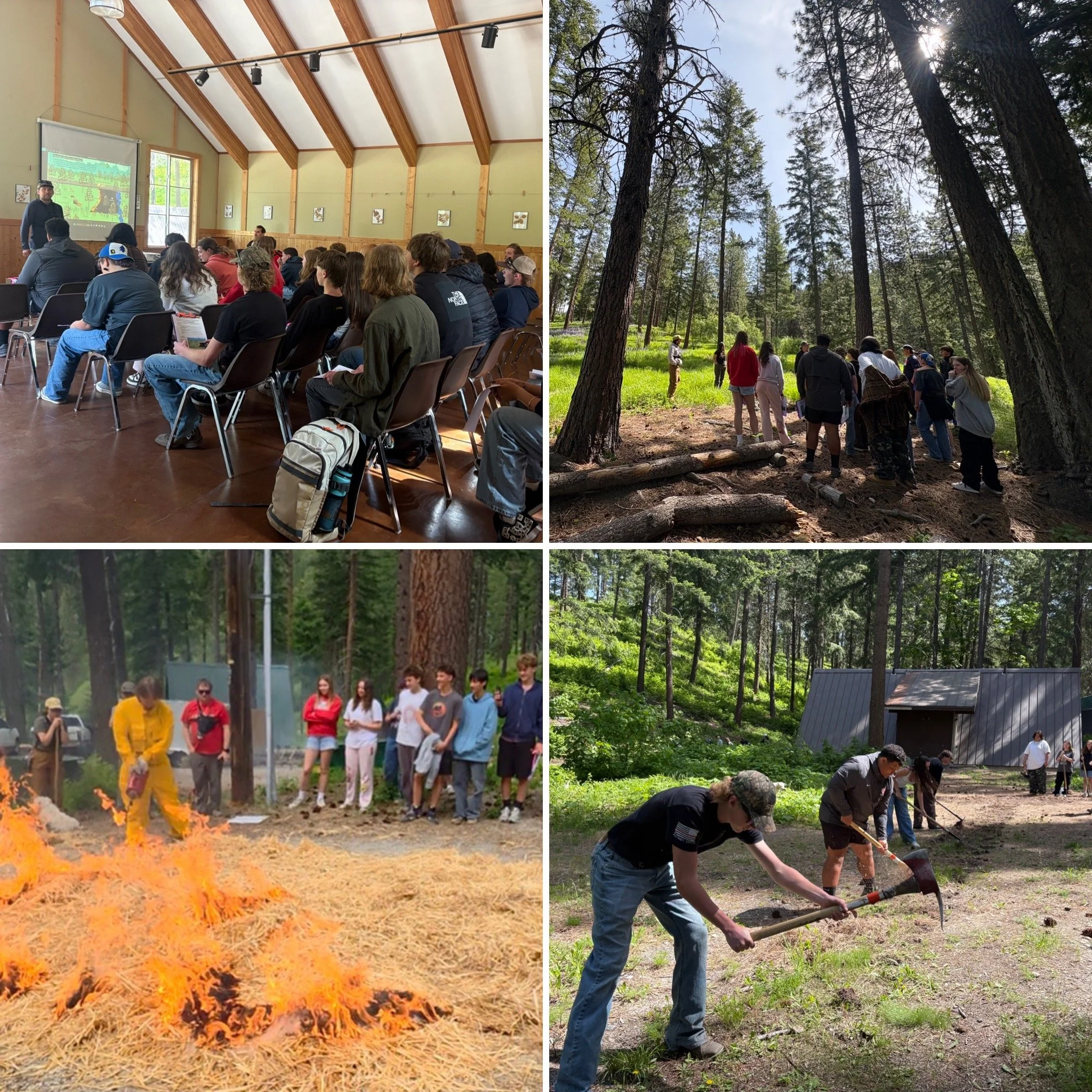
The Cascadia PBA got the call to host a fire effects field trip/learn and burn field day for students from Cascade and Wenatchee High Schools. 30 students along with their teachers, joined staff from the WA DNR, Cascadia Conservation District, WA RCD and the PBA. Students got to observe a burn unit that was two years old, seeing first hand the regeneration, diversity and abundance of native plants. They were introduced to prescribed fire skills like line digging, hose lays, and firing techniques. But most importantly students spent the day learning about fire as a critical ecological process in our local landscapes and the important historical context of humanities role in managing landscapes by using fire as a tool. Engaging and involving local youth is critical to the success of land management objectives in the future.
